|
SOLIDMAGIC · NEWSLETTER |
||||
|
||||
|
BEACON #14 Those who copy winIt’s a familiar scene: I’m sitting at home, headphones on, trying to play a piece without anyone listening. With the bass on my lap and a recording of one of my idols on the screen, I try to play the piece exactly as it’s played there. I’m not performing anywhere or presenting anything – I’m just practising the song for myself. The yardstick here isn’t ‘How do I sound in front of an audience?’, but solely ‘How close can I get to this exact recording?’ This is how I learn things that normal lessons have never taught me in this way – and exactly the same principle works in magic too. I don’t mean to put anyone down, neither my bass teachers nor my role models. After all, a good teacher is priceless, and every lesson is different. In standard lessons, you’re primarily taught the rules: fingering, scales, exercise patterns, tips on posture. All of that is important, no question. What’s often neglected in standard lessons, however, is the ‘why’ behind the sound: why does a particular note land a fraction of a second earlier, why does a phrase take a breath at that exact point, and why does the same sequence of notes sound perfect in one player’s hands but not in another’s? You’re given the guidelines and rules, but rarely is the musical intention behind them conveyed. This, of course, also has to do with the time available in standard lessons. It is precisely this intention that is revealed through conscious copying. When I talk about copying, I don’t mean doing it in public, putting on an Instagram show or saying, ‘Look, I can do that too’. I mean something entirely private. I listen to a passage over and over again until it doesn’t just sound familiar to me, but until I can actually hear where the groove lies, where the fingers go, and at which points my own version is still a bit off. Then I work on matching it, playing slower than the original, in loops and sometimes with ridiculous attention to detail, until the difference between the model and my version gradually disappears and I can actually put my finger on it. This means it’s no longer just silent admiration, but work carried out under direct observation of the model. In the process, something happens that no textbook in the world can give me. I break down another musician’s decisions into their individual parts and try each one out for myself. What previously simply sounded ‘magical’ suddenly becomes a series of tangible details that I can tackle and, if necessary, alter. Often, it’s the nuances that are difficult to convey in lessons because they aren’t notated on the sheet music. Micro-timing and articulation, the question of how firmly a string is fretted, how open or muted its sustain is, and whether a note lands just before the beat or deliberately behind it. Although these things can be practised individually, for me they only come together to form a coherent picture when I have to compare them against a specific musical example. The real learning benefit, however, lies elsewhere. In this mode, there are no step-by-step instructions; no one tells me which cog to turn next. I have to figure it all out for myself: by listening carefully, by making educated guesses, by constantly making corrections, and very often through trial and error. And precisely what I work out for myself along the way sticks more firmly than anything someone hands to me ready-made, because I’ve walked the path myself – complete with the dead ends that are always part of the journey. As long as my copy isn’t perfect yet, I have to listen much more closely than when practising normally. It is precisely this heightened attention that is the real reward – not the perfect copy. Of course, this doesn’t replace the basics such as timing, theory or the clean execution of trick techniques. All of that still needs to be spot on, and copying complements this work. One more thing: if you just mindlessly cram yourself full of details and never really take them on board, you’ll remain stuck at the surface level of imitation. So at some point, you have to decide what to do with the technique you’ve learnt and how to incorporate it into your own work. Very often, you only realise how you can do it better yourself once you’ve studied in detail how others go about their work. Exactly the same pattern applies to magic routines. What interests me most isn’t the sequence of actions – I have to master that anyway if I want to perform the routine – but the small decisions made by the role model: where exactly is a pause placed? Why does a particular phrase have a certain effect on the audience? And why does one movement arouse suspicion, whilst another dispels it? When I analyse this in a reference video or a live recording, I’m not copying it so I can perform it exactly the same way later, but to understand how the routine is actually intended to work. So, simply copying something doesn’t automatically mean you’ve fully mastered an effect or a technique. But it very often gives you clarity about what the other person is actually doing with their routine and why it has such an effect on the audience. For me, therefore, this isn’t plagiarism, but quiet study, driven by my firm resolve not to stop until I can see and explain the difference. And it is precisely what I’ve discovered for myself in the process that I then incorporate into the work I later perform in front of an audience. News from the LighthouseThis newsletter is a day late, owed to a cold/infection/summer flu (?) I still can’t quite make sense of, which knocked me out for almost a week. I used the quieter summer stretch to rebuild my shop from the ground up. The legal requirements that keep getting harder to implement (most recently, for example, the new packaging rules) and the corresponding pitfalls in a large commercial shop system were simply too much for me as a one-man band. So I decided to program and build the shop myself from scratch, which makes the work easier and gives me full control over everything. That way it’s also easier to build in the necessary legal requirements. Apart from that, I’ve come to the conclusion that as a small business that essentially only offers its own creations and services, I don’t need a shop system that’s really meant for mid-sized or large companies. That would be using a sledgehammer to crack a nut. I’m now in the testing phase, which I’m trying out live with you, my customers. I’m glad for any feedback on technical problems. I’m also glad for your wishes about what you’d like to see in my little shop, because I’m programming everything by hand here and can therefore probably implement most of it (before too long).
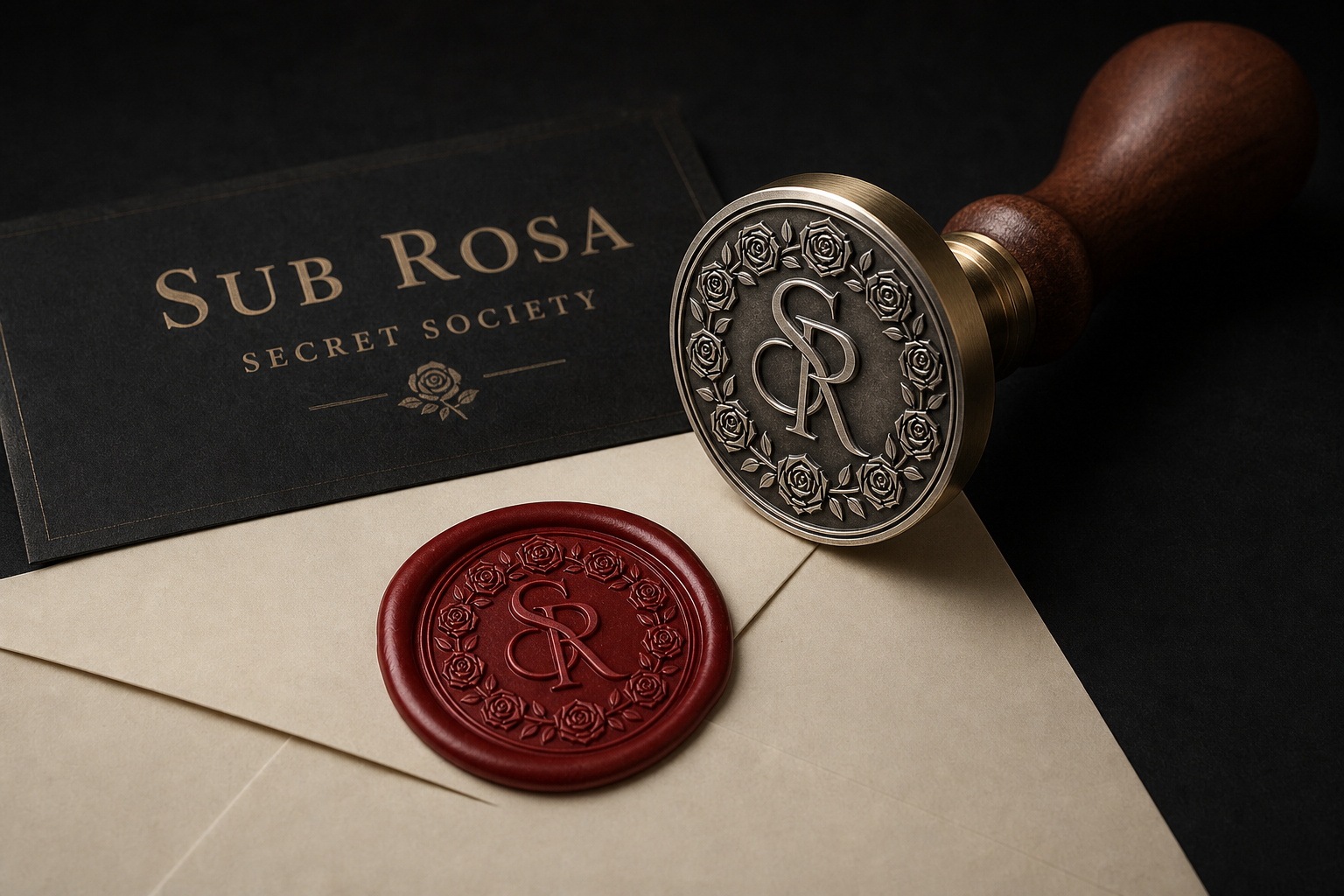
The SUB ROSA ProjectMy new SUB ROSA project is starting the way secret societies start: not with fanfare, but with a handful of initiates. I honestly find that rather fitting. Still, it would be nice if a few more magic friends joined before I decide whether we kick off at the planned date (early August) or only lift the curtain at the beginning of September. So if you’ve been thinking about it for a while: now would be a good moment. Secret projects famously don’t get better if you stay outside forever and only watch. And thankfully there’s no rush… ZOOM MasterclassesAnd a quick note on the Masterclasses via Zoom: in the old shop, the dates eventually became quite a mess. That’s why there’s a clearer solution now — please take a look in the shop. Each date is its own article, clearly marked with the date. That should put an end to the chaos once and for all. I’m getting back to stocking the shop with articles — so it’s worth dropping by again every so often. Until next time,
To the new -> SOLIDMAGIC SHOP |
||||
|
||||