|
SOLIDMAGIC · BEACON |
||||
|
||||
|
BEACON #17 Suspense – What We Can Learn from Alfred Hitchcock{briefanrede}, Alfred Hitchcock once contrasted two versions of the same scene, and the difference is unforgettable. Two people sit at a table talking when suddenly a bomb explodes. The audience is surprised—for about fifteen seconds. In the other version, the audience sees someone plant the bomb under the table before the two sit down. They take their seats and chat about the weather, soccer, anything trivial. They don’t notice the bomb under the table! Now the audience is on edge for fifteen minutes. Nothing has happened, no bomb has exploded, and you’re practically going mad, wondering, "Don’t they see it?" Hitchcock called this surprise versus suspense. Surprise is over in a moment; suspense lasts as long as we know something is under the table and we’re waiting for it to go off. He used this technique in nearly every one of his films. In *Rear Window*, the audience knows the man across the way is dangerous. Then the woman we’re following walks right into his apartment, and we have to watch as he comes home while she’s still inside. In *Psycho*, he made us root for a woman who had stolen money. Just as we started to like her—enter the shower scene. His tool was the discrepancy between what we knew and what the characters didn’t. Hitchcock once said: „There is no terror in the bang, only in the anticipation of it.“ The terror isn’t in the bang—it’s in waiting for the bang. When we have someone choose a card, reveal it immediately, and say, “Look, ta-da—here’s the chosen card,” that’s a bang without the wait beforehand. Maybe it’s a surprise, but no one is on the edge of their seat wondering what will happen next. Tension builds when the audience has to wait. When they know something is going to happen, but not how, when, or if it will succeed. They see the bomb under the table, know what could happen, and can do nothing but watch. We can take three things directly from this. The first is the knowledge advantage. Hitchcock often gave the audience more information than the characters. Tension doesn’t come from ignorance—it comes from knowing that something specific could happen. For us, this means: some tricks become stronger when the audience sees or hears something beforehand that creates a sense of foreboding. A prediction sealed in an envelope from the start—maybe a date or a word on a slip of paper. Or a card already lying visibly on the table long before the trick begins. The audience knows something is there and waits to find out what it means. The tension starts long before the actual moment. Paul Curry demonstrated this with his Open Prediction: the prediction is out in the open before anything happens. The second is that the outcome has to matter to us. Hitchcock knew tension only works if something is at stake. If we don’t care what happens to the characters, we can place the bomb under the table however we like. We often overlook this in magic. The technique can be flawless, and yet nothing happens because the audience doesn’t care about the outcome. They have no reason to worry whether it will work. We have to create that reason. It could be a story tied to the trick. It could be something the audience themselves contributed. Or it could simply be the question: What happens if it doesn’t work? In Bank Night, for example, something is at stake that can be lost. Suddenly, the outcome of the routine matters. The third is delay. Hitchcock didn’t resolve conflicts and tension any sooner than he had to. He stretched out scenes, prolonged moments, and withheld information because the suspense lies in the waiting. In editing, he kept asking whether he could make the audience wait just one moment longer. We often reveal our tricks too soon. We rush to the good part because we want to perform the trick and finish it, hoping for applause. But the good part isn’t the trick itself—it’s the tension the audience feels beforehand. And tension isn’t threat; it’s uncertainty where the outcome matters to us. In Hitchcock’s films, it’s not always about life and death. Sometimes it’s a mystery, a question, a misunderstanding. But the outcome must feel important. Hitchcock positioned the camera so the audience saw the bomb. He decided which information we received and which we didn’t. The experience was designed from the very first scene—not just the characters’ plot. We can do the same (with care!). What information do the spectators get first? What do they see before the actual trick begins? What will they think when I show this object, say this line, or insert this pause? Whoever structures a performance this way begins to build tension—not as a sequence of tricks, but as what the audience experiences step by step. Hitchcock didn’t need loud effects; a visible, fake bomb under the table was enough for him. SUB ROSA Project still open for registrationsMy SUB ROSA project is still accepting registrations—we haven’t started yet. As I’ve said, there’s no rush, and I only want truly interested magic enthusiasts to join. You can find more information here: http://vault.solidmagic.org/.
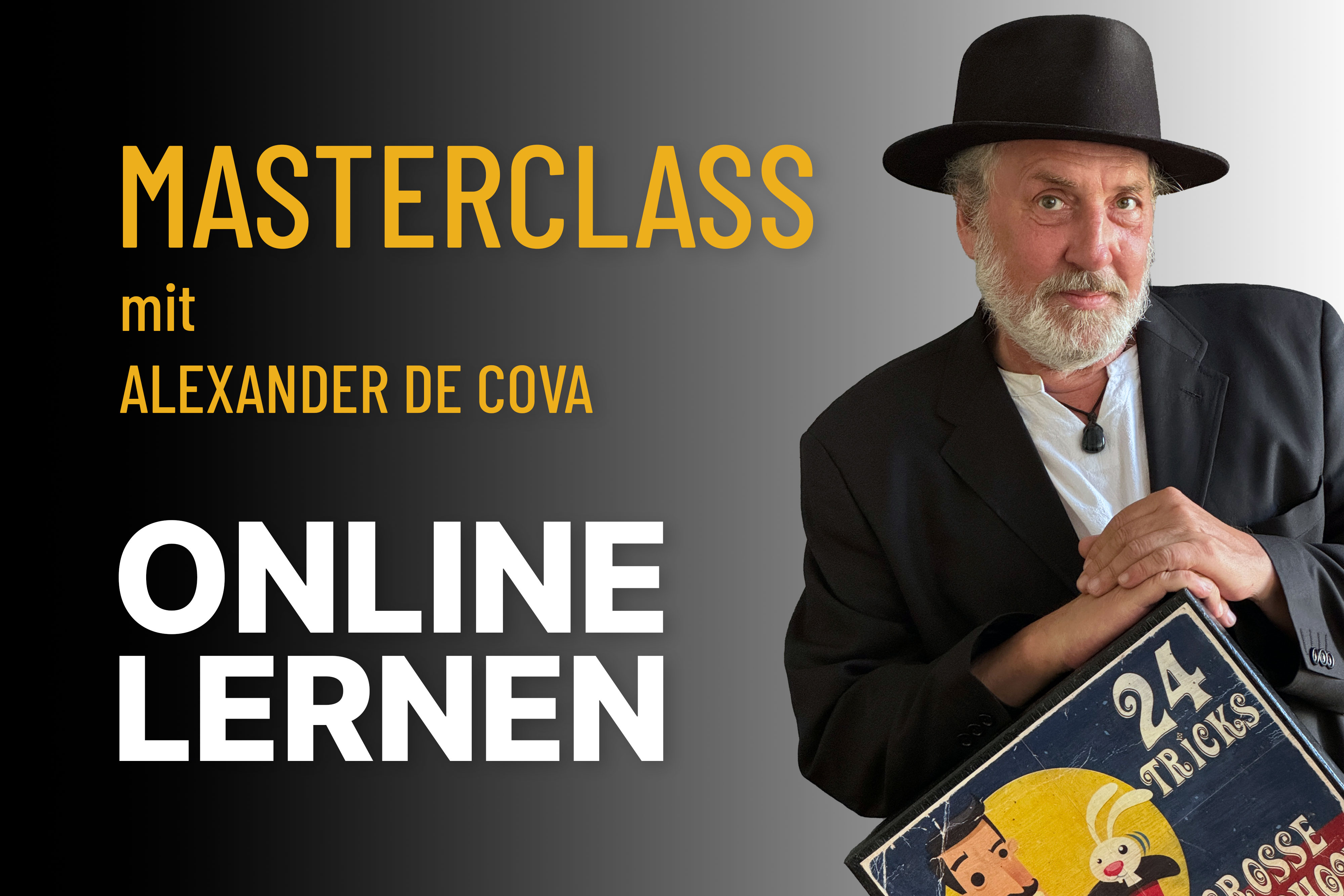
MASTERCLASSES with Alexander de CovaWord is slowly getting out about how valuable my Masterclasses are. They’re an excellent way to deliver a wealth of concentrated knowledge online in a short time. You can find all available dates on the website: https://solidmagic.org/de/academy.
Until next time, Alexander |
||||
|
||||