|
SOLIDMAGIC · BEACON |
||||
|
||||
|
BEACON #19 The Myth of the Worker & Co.{briefanrede}, “Now that’s a real Worker! It always goes down well! Hits like a bomb!” – You’ve probably heard phrases like these before. In the magic scene, we encounter Workers, Burners, Workhorses, and Bombs. These terms refer to tricks you can rely on, ones that supposedly always wow audiences, anywhere and everywhere. Tricks that have an extreme impact and seem like “miracles.” Such labels are convenient, sound experienced, and spark curiosity. Most of it strikes me as dealer talk, though, and carries a promise no trick can truly deliver. That doesn’t mean we have to ban these terms. When a colleague calls a routine their “Worker,” it can be useful information: they use it regularly, know its requirements, and have had good experiences with it. The key word here, though, is “their.” What works for them works under their specific conditions. With their personality, their presentation, and in front of their audience. You can’t simply replicate that by buying the props. The problem arises when we turn this personal experience into a general attribute of the trick. Suddenly, “Worker” sounds as if the effect is built right in. Unpack the props, perform the sequence, and success is guaranteed. And that, to me, is where the myth begins. Because a trick brings possibilities. What the audience actually experiences only comes to life in the performance. My mentor, Prof. Dr. Toni Forster, put it very aptly: “This routine could have a powerful impact if presented adequately according to the performance circumstances.” What I like about this statement is its precision. The routine *could* have a strong effect. It conveys confidence in its potential but also sets a condition. The presentation must fit the circumstances. That might not sound as salesy as “absolute bomb,” but for us as performers, it’s far more helpful. It directs our focus to the part we’re responsible for: what we make of the trick and how we bring it to life in front of an audience. These circumstances include very concrete factors: Can all spectators see the crucial action? Is our language clear? Do we have the attention the sequence requires? Does the duration fit the situation? Can the audience follow what happened and why it seems impossible? A routine whose impact depends on a small, visible detail demands different considerations than an effect that even the back row can clearly perceive. We should also distinguish between technical reliability and impact. A trick can work flawlessly in terms of method yet leave little impression. Perhaps the initial situation was unclear. Maybe the decisive moment when the effect occurs was treated too casually. Or we talked so much and rambled on pointlessly that the audience lost the thread long ago. The fact that the method worked only tells us something about the method itself. These convenient labels can tempt us to skip such questions. When selecting a routine, the recommendation “It always works” may suffice. When preparing, we often rely too much on the routine’s reputation or the aforementioned label. If the expected reaction fails to materialize, we might look for explanations in the audience. Yet this is precisely when a closer look at our own performance would be most helpful. That’s why I don’t blindly trust such verbal “recommendations” and prefer to ask myself these questions instead: For which situations has the trick proven effective? What are the prerequisites and conditions? What experience does the performer need? For what kind of audience is the trick suitable? And which of these factors align with me? These questions don’t make a good trick any worse. They help us choose it wisely and fully exploit its potential. We can celebrate strong routines and enthusiastically recommend them. The term “worker” can stay in our vocabulary. We should just keep in mind that this word doesn’t do the actual work for us. So the next time you hear about a “bomb,” it’s worth taking a step back and considering: What does this trick need to have a powerful impact in my hands and for my audience? The answer requires more attention than a catchy label. And that’s exactly the attention our magic deserves. ***
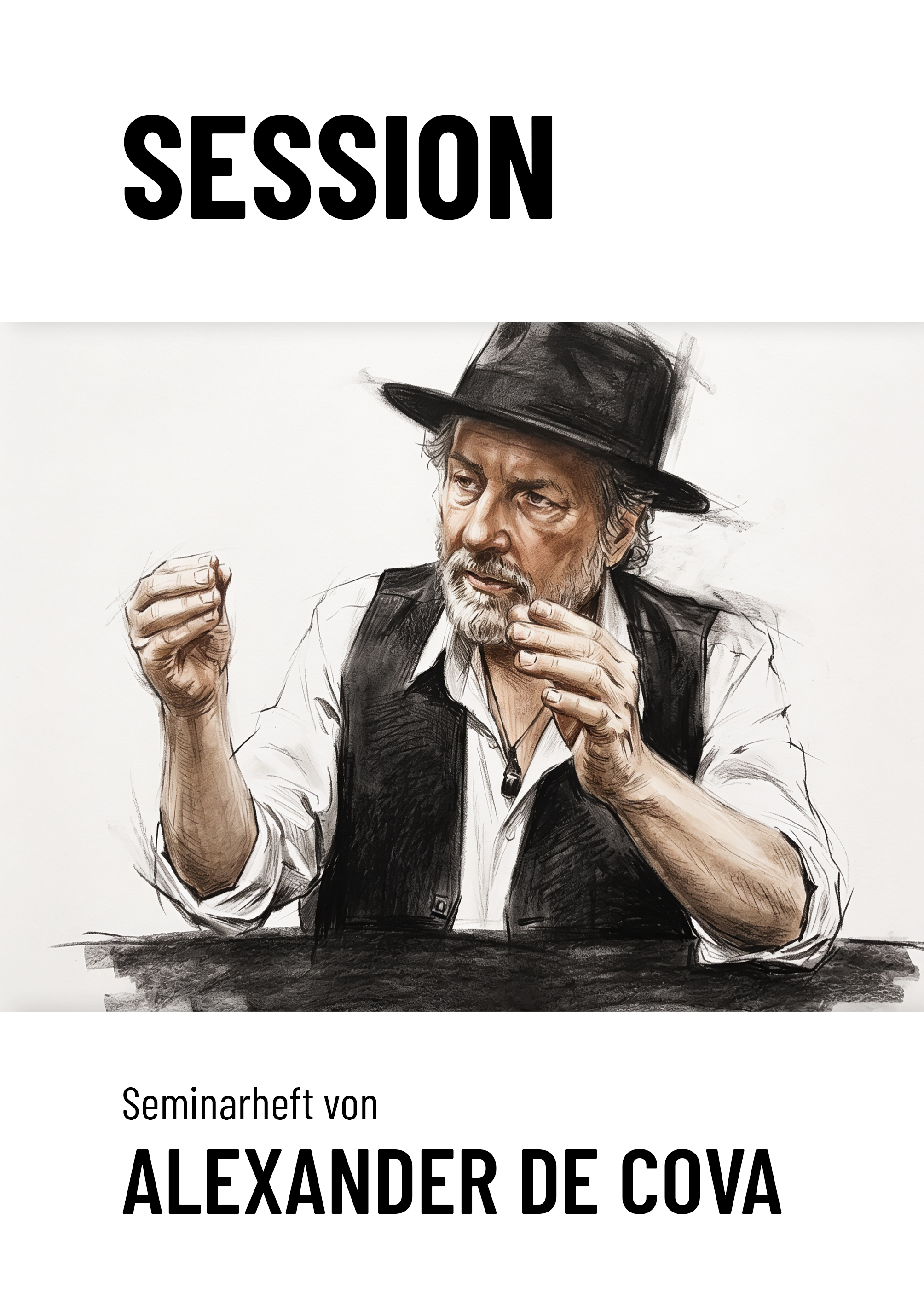
NEW RELEASE Screenwriting Software SOLIDMAGIC ScriptAfter a long time and dissatisfaction with existing industry solutions for screenwriting, I decided to create my own screenwriting software tailored specifically to our needs as magicians. With SOLIDMAGIC Script, you write your magic routines in a way that ensures your presentation and actions align perfectly. The Cornell column keeps your stage directions right next to the text. Plus, you get text highlighters, sticky notes, and a print preview for your rehearsal draft. Offline in your browser, no installation, no subscription. -> https://solidmagic.org/de/produkt/solidmagic-script *** BACK IN STOCK! Bill in Marker 2026I created this effect back in 1994, and to this day it remains one of my favorite close-up magic tricks. A borrowed and signed banknote vanishes and then reappears folded inside a thick felt-tip pen. At the time, I released the trick in a limited edition, which sold out almost immediately. Since then, it has become a sought-after effect, and fellow magicians have repeatedly asked me when it would be available again. However, in the meantime, the company Edding changed its product range, and the pens that were perfect for the trick were no longer produced in that form. As a result, the trick could no longer be manufactured. Now, however, new pens—and above all, an improved thimble from Vernet—have made “Bill in Marker” possible again! I’ve also incorporated several key improvements, streamlined the routine, and made the effect even more convincing and easier for the performer. -> Click here to visit the shop, where you can learn more about this outstanding trick. *** New AdC Seminar: SESSIONI’ve put together a new seminar titled SESSION. In Irish music, for example, a session means that several musicians come together to play traditional Irish tunes: jigs, reels, hornpipes, and so on. These are usually a colorful mix of pieces, which is why I find the title fitting for my new seminar: a variety of new tricks and ideas from (almost) all areas of magic, delivered in the usual AdC quality. Everything is practical, not too difficult, and, above all, well-received by audiences. Those who know me are aware that I place the greatest emphasis on the “Keep it Simple!” principle, and I’m staying true to that in this new seminar as well.
*** SUB ROSA Project
My SUB ROSA project is still accepting registrations—we haven’t started yet. As I said, there’s no rush, and I only want truly interested magic enthusiasts on board. You can find more information here: http://vault.solidmagic.org/. *** MASTERCLASSES with Alexander de Cova Word is slowly getting out about how valuable the Masterclasses are. They’re an excellent way to deliver a wealth of concentrated knowledge online in a short time. On the website, you’ll find all available dates: https://solidmagic.org/de/academy. Until next time,
|
||||
|
||||